A HAM Pilgrimage: International Marconi Day Special Event Operation
Notes from the International Marconi Day special event operation at Signal Hill, with reflections on radio history and amateur radio culture.
Copyright notice: This article is original work by the author. Any republication must contact the author and receive permission first. The people appearing in the photos have given consent, and the author owns the photo copyright.
On April 27, 2024, International Marconi Day, I was fortunate to join a special event operation held at the Signal Hill historic site. Signal Hill is where humans first used radio waves to transmit a signal across the Atlantic Ocean. The experiment was completed by Italian radio engineer Guglielmo Giovanni Maria Marconi on December 12, 1901, at Signal Hill in St. John’s, Canada. Being able to come here and participate in this special event felt like reaching a pilgrimage site for amateur radio operators around the world. Marconi’s experiments, and his work applying electromagnetic waves and radio to communication, are part of what allows us to make contacts with HAM friends across the world today. So I wanted to share what I saw during this “pilgrimage” as a casual record and as a small exchange of radio culture.
The story begins in Italy.
On April 25, 1874, a baby was born in the Palazzo Marescalchi in central Bologna. That child was Marconi, born into a noble family and destined to influence the entire world. Educated only by private tutors, Marconi developed an early interest in science and electricity. At 17, he was deeply influenced by his physics teacher, Professor Vincenzo Rosa, and by the research of Heinrich Hertz. He gradually built a foundation in physics and formed a bold idea.
At that time, physicists were very interested in radio waves, but most treated them only as a scientific phenomenon and had not seriously considered them as a medium for communication. Marconi, however, had already begun thinking about “wireless telegraphy” in the early 1890s. As a young man, he built a series of radio transmitters and receivers. The devices were something like pressing a telegraph key on a bench and causing a bell on the other side of the room to ring. After demonstrating the setup many times to family and friends, he received their support. With their encouragement and promotion, Marconi’s invention gradually gained attention.
Marconi demonstrated this novel technology in several countries and attracted international interest. At the same time, he did not stop exploring long-distance communication. He sent the first wireless communication over open water: a message across the Bristol Channel, from Flat Holm Island to Lavernock Point near Cardiff, a distance of only 6 kilometers (3.7 miles).
As the experimental distances grew, Marconi tried to push the limit while also competing with transatlantic telegraph cables. At the end of 1901, he organized a great experiment: a high-power wireless station at Poldhu in Cornwall transmitted a radio signal, while at Signal Hill in St. John’s, Newfoundland (now Newfoundland and Labrador, Canada), he used a 500-foot (150-meter) kite-supported antenna to receive it. This is the same site where this special event took place. The distance between the two points was about 2,200 miles (3,500 kilometers). Although the received signal had a poor signal-to-noise ratio, and many people questioned whether the message had really been received correctly, this was the first transatlantic radio-wave communication in human history. Humanity finally had a chance to move beyond older, complicated, and labor-intensive forms of communication.
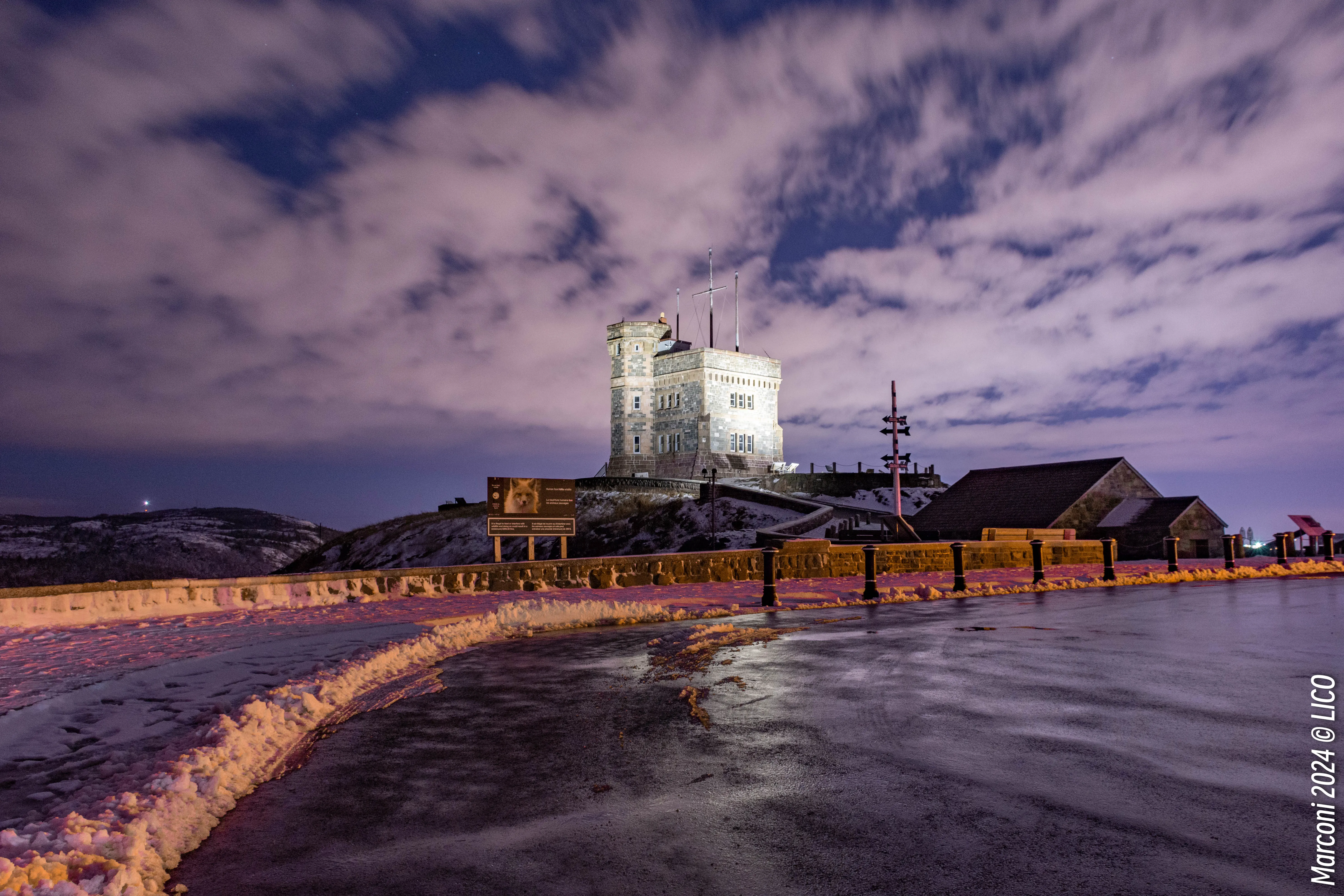
Signal Hill historic site at night.
Looking back at the details of the experiment, it was, frankly, a messy situation. People did not yet understand radio-wave propagation well. They used a wavelength of 350 meters, roughly 850 kHz, and ran the experiment during the day. Most radio amateurs know that at this wavelength, daytime long-distance propagation is nearly impossible because the ionosphere heavily absorbs skywave signals. Maybe it was sheer power. Maybe it was luck. Maybe it was the clean radio environment of the time. Somehow, people faintly heard the confirming signal. In any case, the age of radio communication had arrived.
After that, people gradually recognized the huge advantages of radio communication. The sinking of the Titanic on April 15, 1912, the First World War, international telegraph services, and broadcast entertainment all helped show the value of radio to a wider public.
Later, to commemorate Marconi’s outstanding achievements in radio applications, the Saturday closest to April 25 each year was designated International Marconi Day. Marconi received the Nobel Prize in Physics in 1909 and is often called the father of radio.
Today, radio still has a deep and important influence on humanity. We have Voyager 1 sending signals from deep space, roughly 24 billion kilometers away, and we also have the convenient 4G/5G/Wi-Fi communication used by almost every smartphone. We have the Five-hundred-meter Aperture Spherical radio Telescope, also known as China’s FAST, searching for intelligent extraterrestrial signals, and Starlink building a global satellite communication network. Our lives can no longer be separated from radio technology. Because of that, as a radio amateur, standing in front of Signal Hill, a site with nearly 300 years of history, and thinking about humanity’s long exploration of science and technology gave me a strange feeling of crossing time. Maybe, on some day millions of years ago or even earlier, a human ancestor looked up at the stars, and from that moment we gained the courage and longing to keep exploring the mysteries of the world.
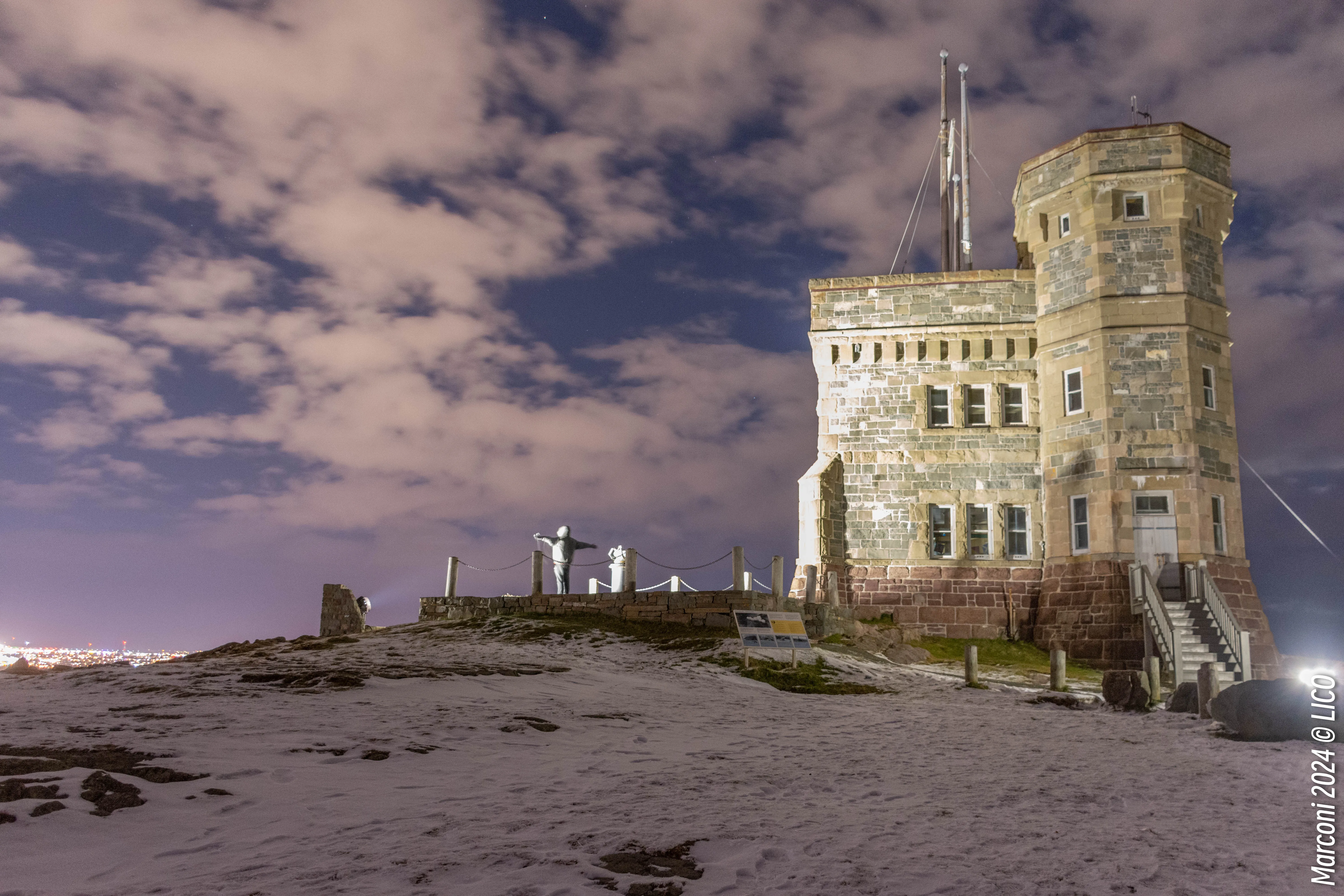
The author standing in front of Cabot Tower at Signal Hill.
After all of that, I personally think Signal Hill fully deserves to be called a pilgrimage site for amateur radio operators. Being able to hold a Marconi Day special event here, and to guest-operate even briefly, was something I would barely dare to dream about. Yet today it did not feel like a dream. It felt like a real pilgrimage.
All right, enough reflection. Back to the event. This year’s Marconi Day fell on April 27. I contacted VO1HP early to ask about the arrangement and received a positive reply. I am very grateful to VO1HP (Frank), to SONRA, and to all the HAMs there that day for their warm welcome.
The event was held at Cabot Tower. That morning, I got ready early and went up the hill with a lot of excitement. After walking along the winding road, I finally reached the top. As I walked slowly through the parking lot, several cars stood out immediately: tall mobile antennas, and callsign license plates that clearly marked their owners as HAMs. These were the vehicles of the operators at today’s event. In some Canadian provinces, it is legal to use one’s callsign as a license plate number. This is a distinctive culture, and in emergency situations it can also help emergency services and the public identify communication resources.
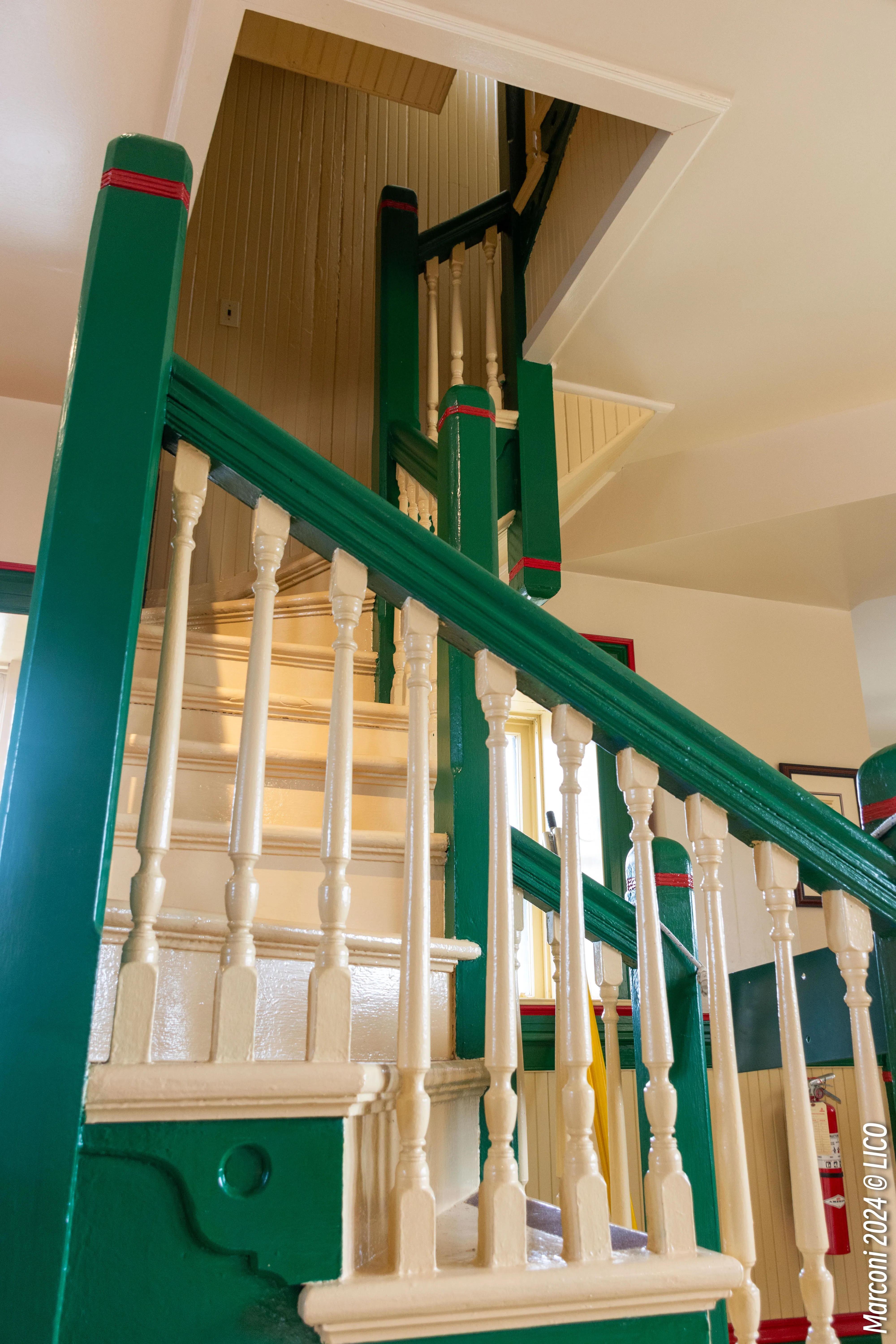
The stairs in the small building, apparently freshly painted.
I pushed open the creaking wooden door, passed the gift shop on the left side of the first floor, and heard children playing inside. Then I slowly started up the narrow wooden staircase. The handrail seemed freshly refinished and carried a faint smell of paint. On the second floor, three to five people were gathered in a circle. Some leaned against the windowsill, while others held cups of Tim Hortons (a classic setup, honestly) and chatted. A younger HAM was operating the station. An elder noticed me and shook my hand: “You made it!” “Yeah, it’s my privilege!” I felt genuinely lucky and honored, because the person shaking my hand was VO1HP, Frank, chair of the Canadian Amateur Radio Hall of Fame. VO1HP has made major contributions to promoting and spreading amateur radio in Canada. After a brief greeting, I met each of the operators present. Then everyone continued discussing amateur radio experience, antennas, propagation, and so on, and I gladly joined the conversation.
Later, the HAM who had been operating the station invited me to try operating as well. This was VO1IV, who has served as the operator for the resident special event operations in recent years and is also an accredited volunteer examiner for amateur radio exams. VO1IV is extremely skilled in practice. His special trick is receiving and sending CW while using his other hand to type the log on a keyboard. His rhythm and accuracy were both impressive, and everyone there applauded him. Under VO1IV’s guidance, I also tried operating FT8 and made some QSOs. To be clear, it was not that I did not want to use CW or SSB. Propagation that day was simply not good. At first, even FT8 on 10M produced very few successful QSOs. I suggested switching to 17M FT8, and unexpectedly we got a pile-up. (It reminded me of last year’s May Fifth event, where I was also an OP responsible for 17M FT8 and also got a pile-up. Maybe I have some kind of affinity with the 17M band.)
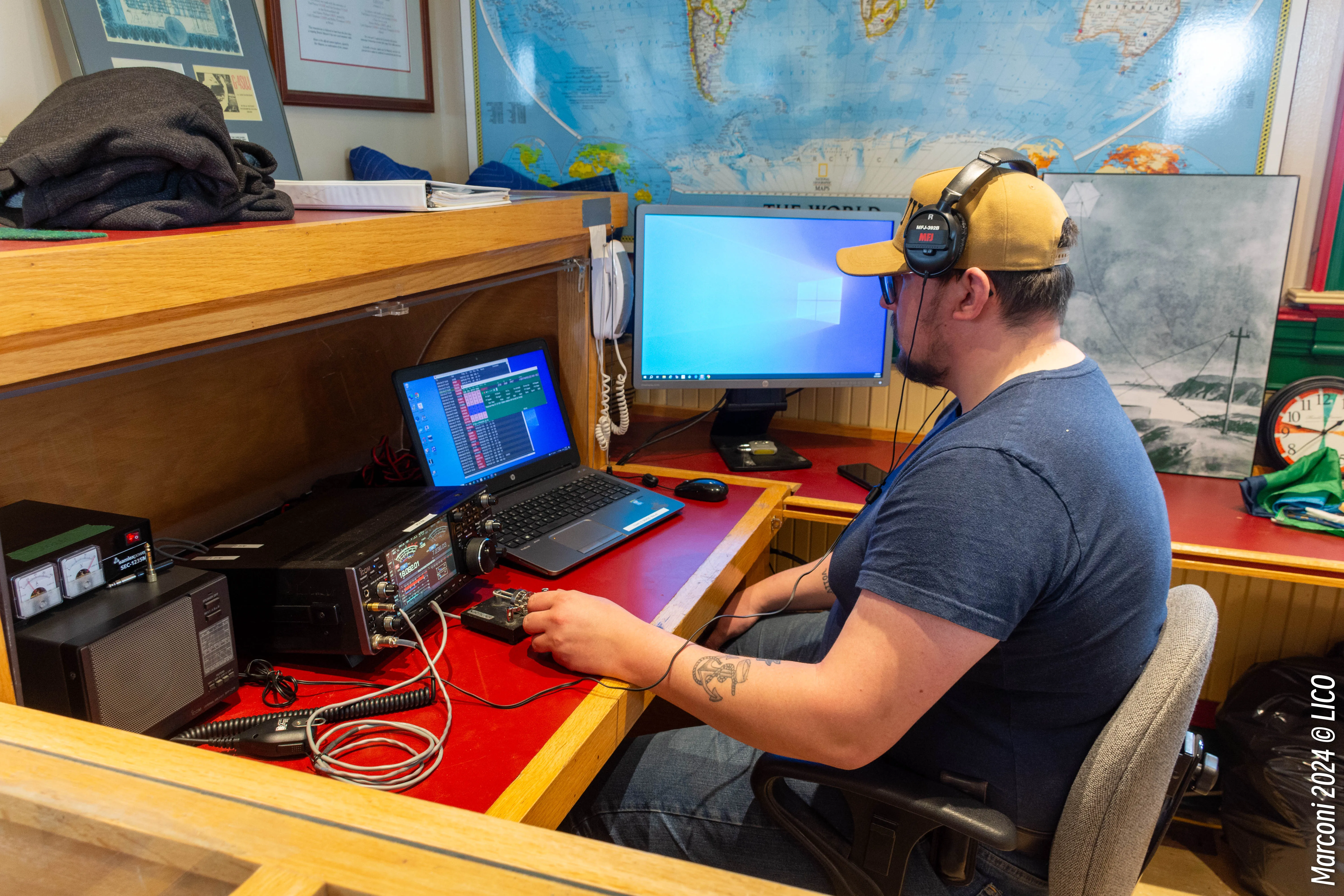
VO1IV making CW contacts.
VO1AA, as SONRA’s main station and the event station, had a somewhat unbalanced setup. The transceiver was an ICOM-7610, but the antenna system was much more modest: only a long-wire antenna with an automatic tuner. After asking about it, I learned that Signal Hill is a historic site, so setting up antennas is inconvenient. The place has rich history, at least 300 years of it, and preservation comes first. Fortunately, for contests, there is a dedicated antenna farm in the southern suburbs of St. John’s. Still, even the 7610 alone is equipment I could only dream about. Unfortunately, various devices in the gift shop downstairs seemed to cause significant interference to our operation.
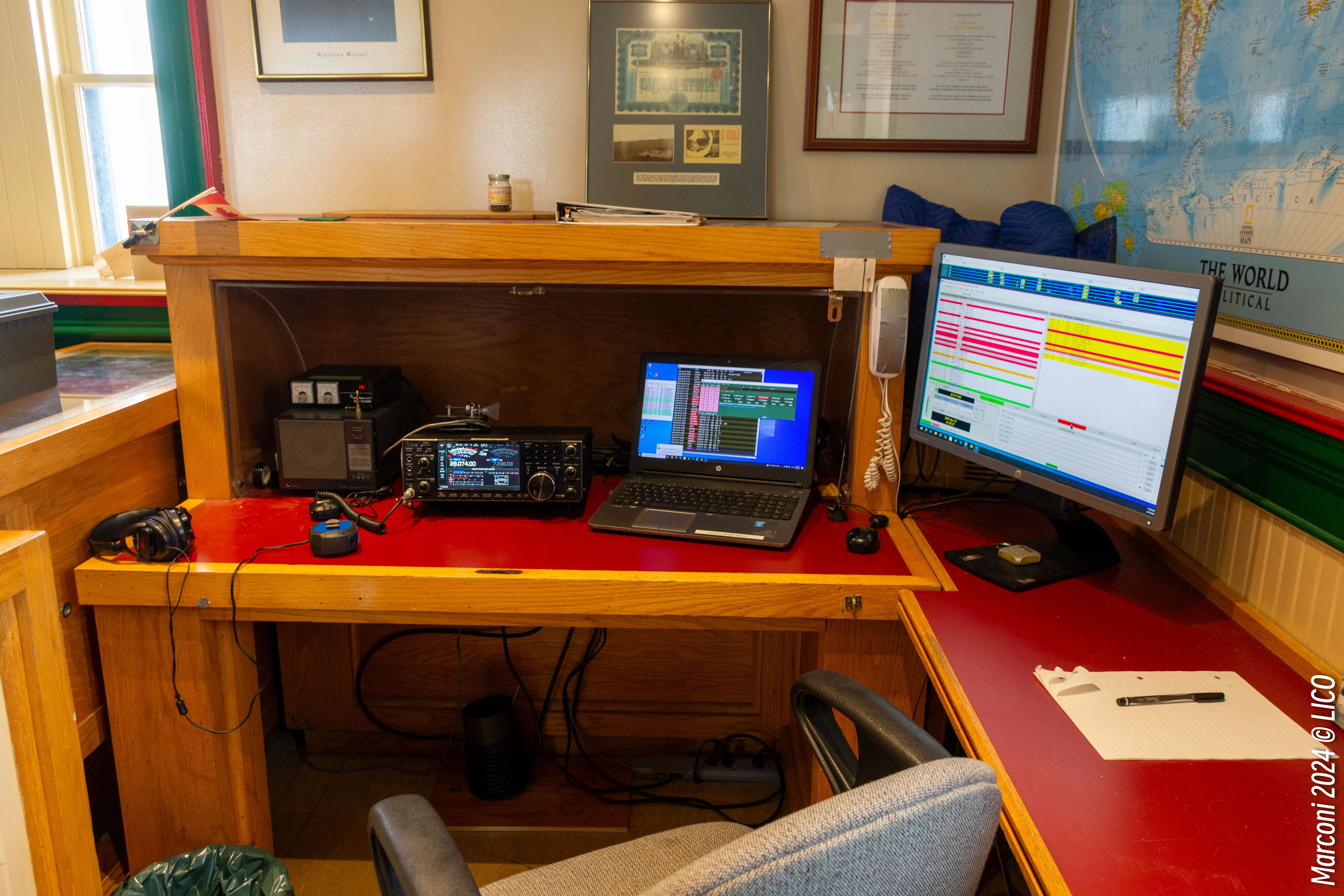
The VO1AA operating position and IC-7610, sponsored by ICOM.
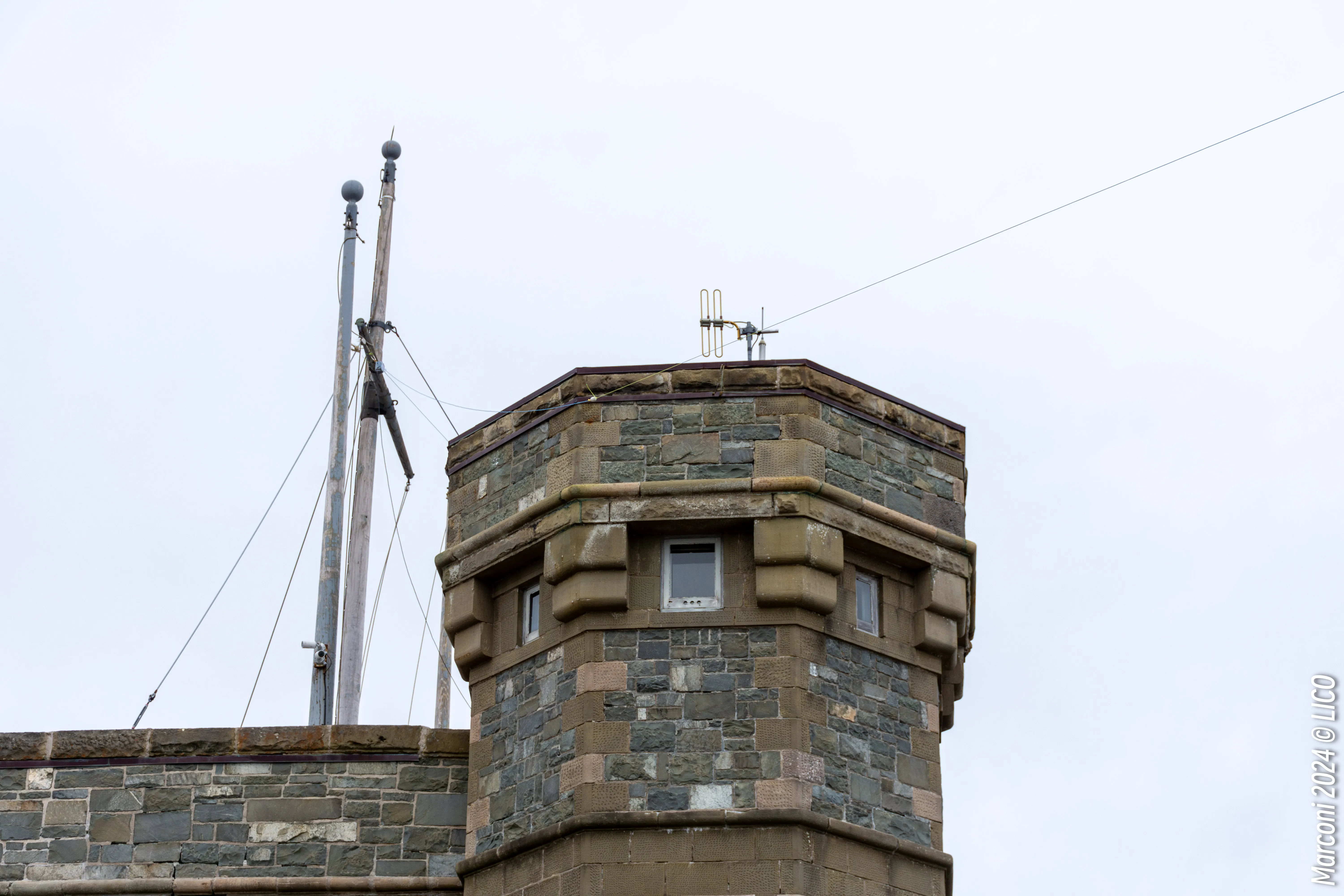
The long-wire antenna used for the event. It was a little underwhelming.
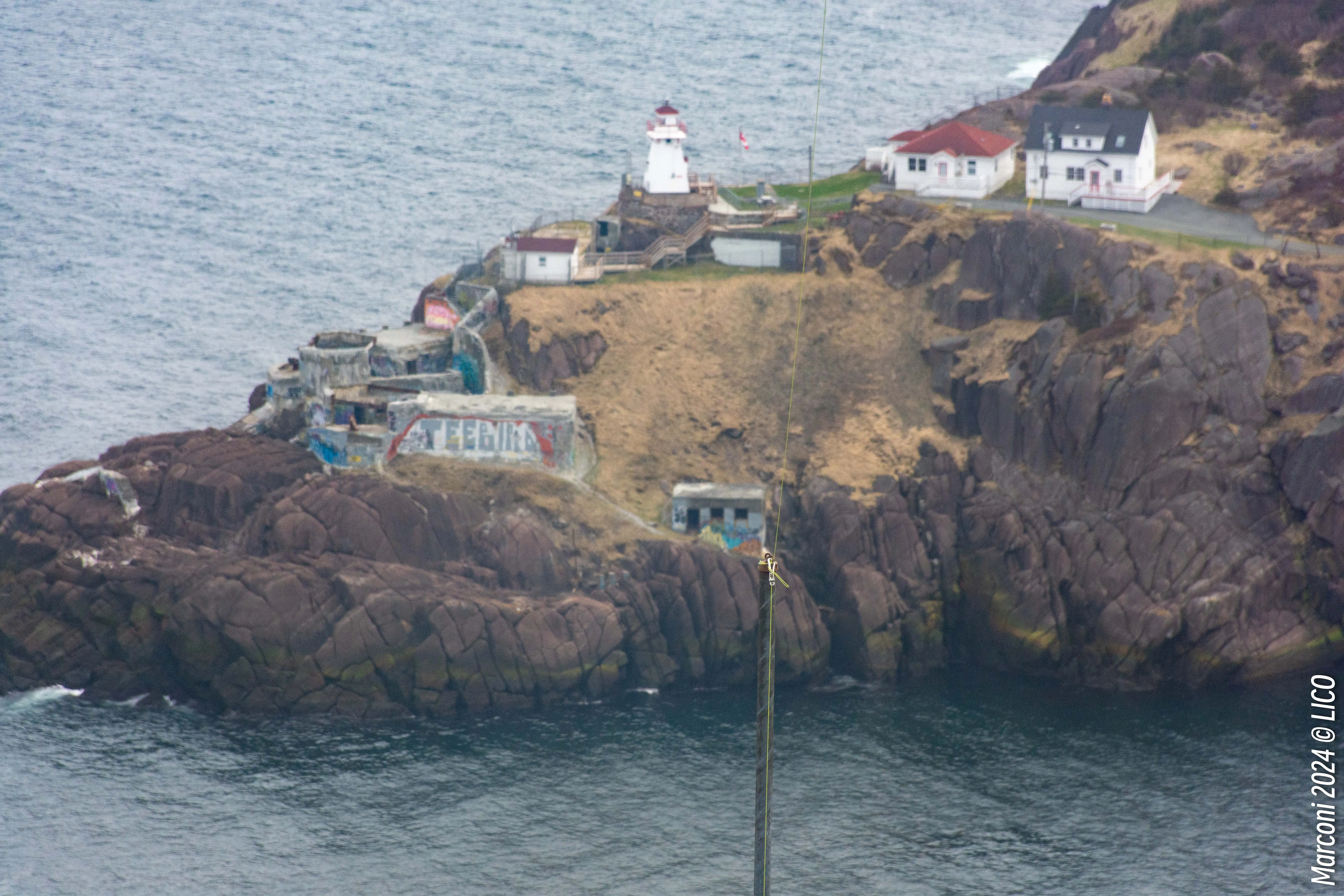
The guy line for the station’s long-wire antenna. Fort Amherst, a military coastal artillery complex from the First and Second World War periods, is in the background.
After using FT8 for a while, propagation seemed to improve, so we decided to try SSB. VO1CH made some broad calls, but the result was still not ideal. Interestingly, we also encountered a few “enthusiastic” HAMs chasing us with large amplifiers. But with poor propagation, they caused interference and still could not hear our replies. It was unfortunate. There were also stations giving careless signal reports. Some signals were clearly only 55 or 56, yet they replied with 59 for everything, which drew plenty of complaints from the room. Personally, I think a friendly 59 report is fine when old friends are chatting, but for a special event operation, it is better to be factual and a bit more serious. Everyone took turns calling CQ for a long time, but the results were limited. Apart from a few scattered European stations, the rest either had QSB or could not be copied at all. We had to give up, return to FT8, and then continue the tea party, or rather, the coffee discussion.
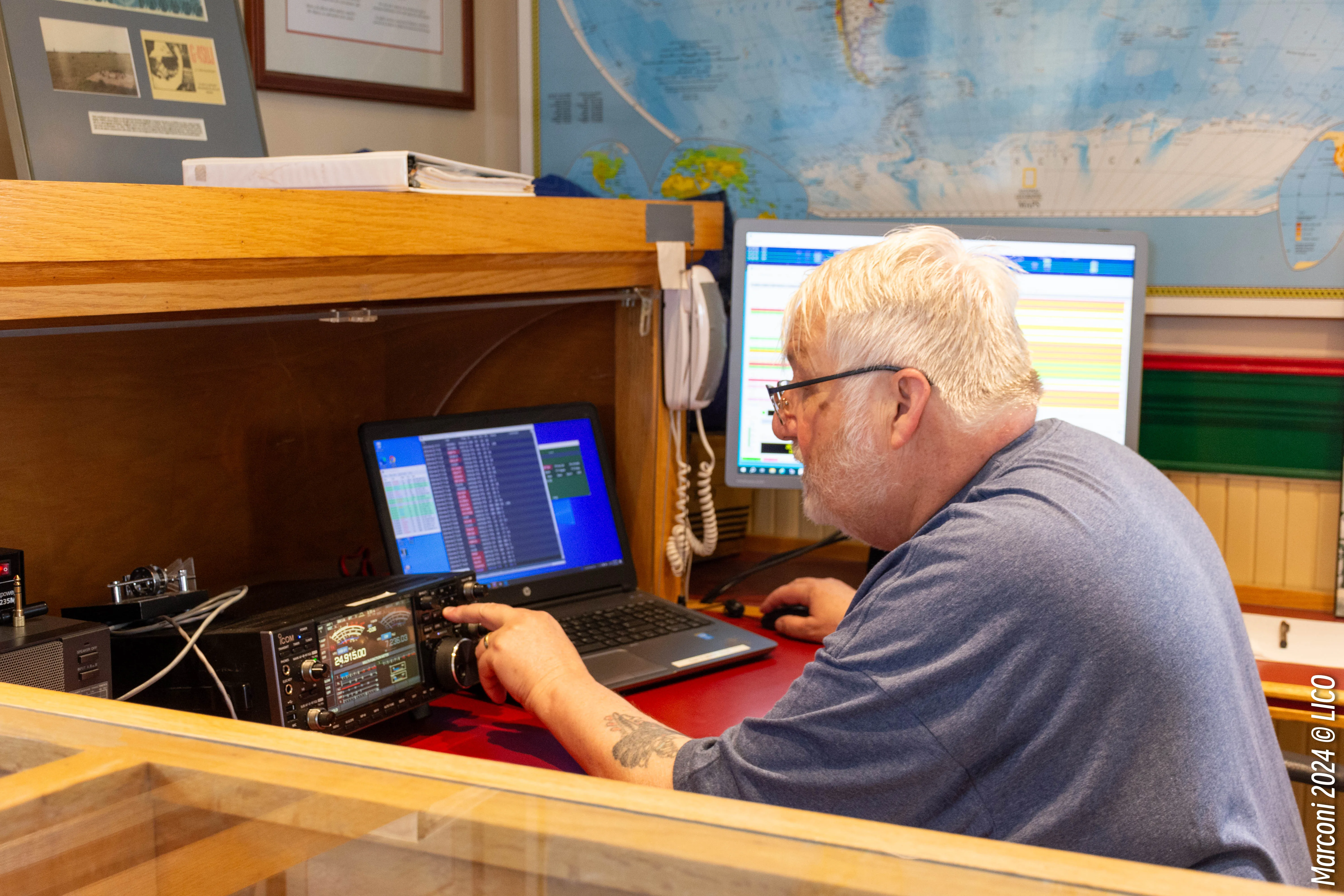
VO1CH looking for responding stations.
One of the younger HAMs introduced me to his VHF and UHF equipment, which left a deep impression. VO1HAX is almost 10 years older than me, but among all these heavyweight senior HAMs he was still one of the younger ones. He showed me his equipment and system. This HAM, who loves the VHF/UHF bands, also enjoys mobile operation and digital technology. Among the vehicles in the parking lot, his had the most antennas: one on each side of the hood, three at the rear, and another millimeter-wave antenna plus a GPS antenna on the roof. It looked almost like a communications vehicle. We had a great conversation because we shared a topic: building automatic radio systems with Raspberry Pi. To optimize mobile operation, he had added a large touchscreen to his Raspberry Pi 3B. He is clearly a HAM who enjoys combining computer technology with radio. (He also repeatedly mentioned that he likes vacationing in Colombia and recommended it. It seems he really does like it.)
While we were chatting, tourists also came by out of curiosity and stopped to watch. In theory, this type of activity requires registration, but since the event was also meant to promote amateur radio, we simply started explaining amateur radio and Marconi’s story to visitors. I also noticed the exhibits around the operating table, including logs, records of visits by public figures, coils, keys, and various transmitting and receiving devices. One detail worth mentioning is that in 1997, to celebrate the 500th anniversary of John Cabot’s discovery of North America, Queen Elizabeth II came here and used the amateur radio callsign VO500JC to communicate with a UK station. The goal was to encourage people to create more history from this already historic site and to keep exploring and discovering. So, by rounding very generously, I have met the Queen. (Just kidding.)
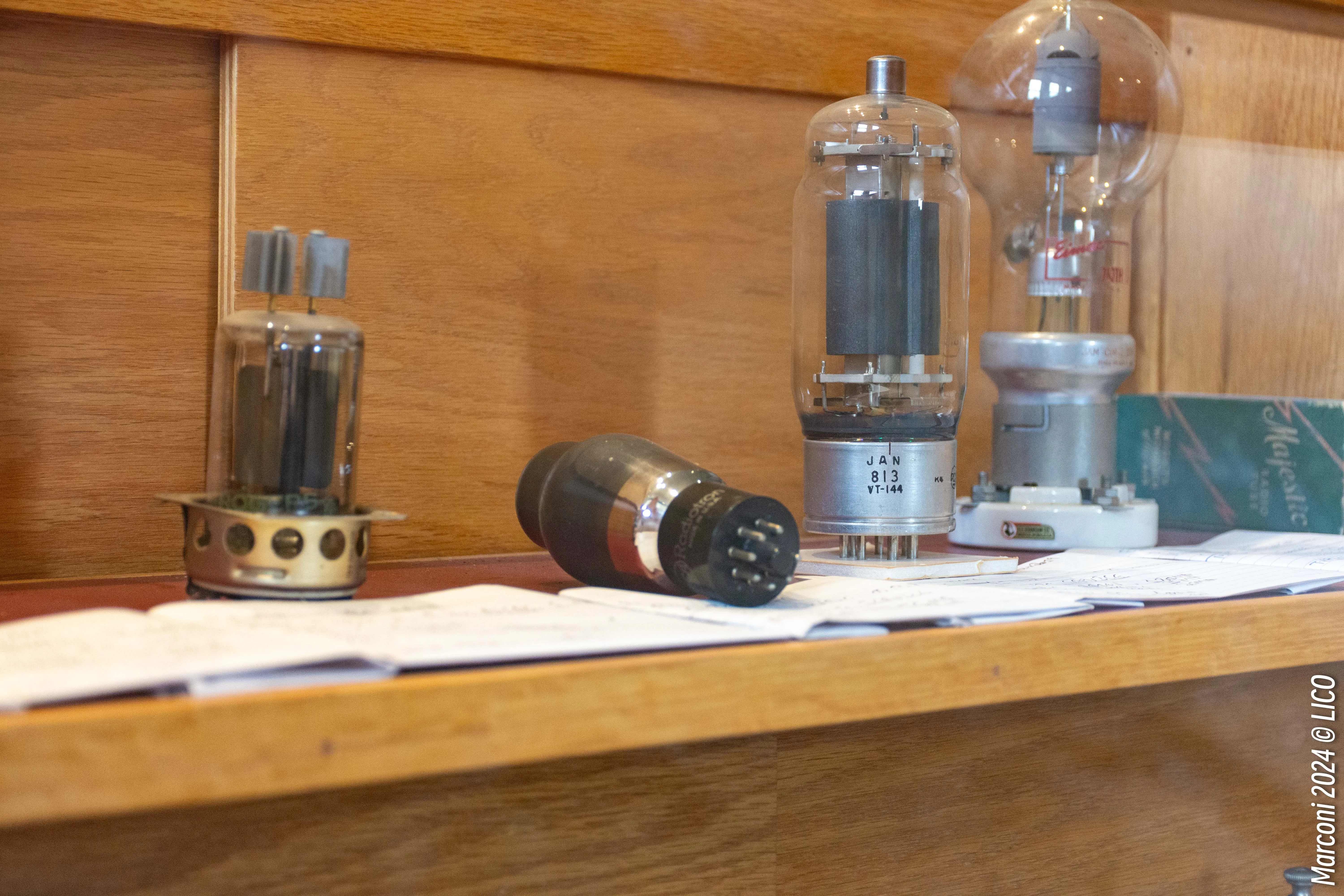
Various vacuum tubes. If you know them, please help identify them.
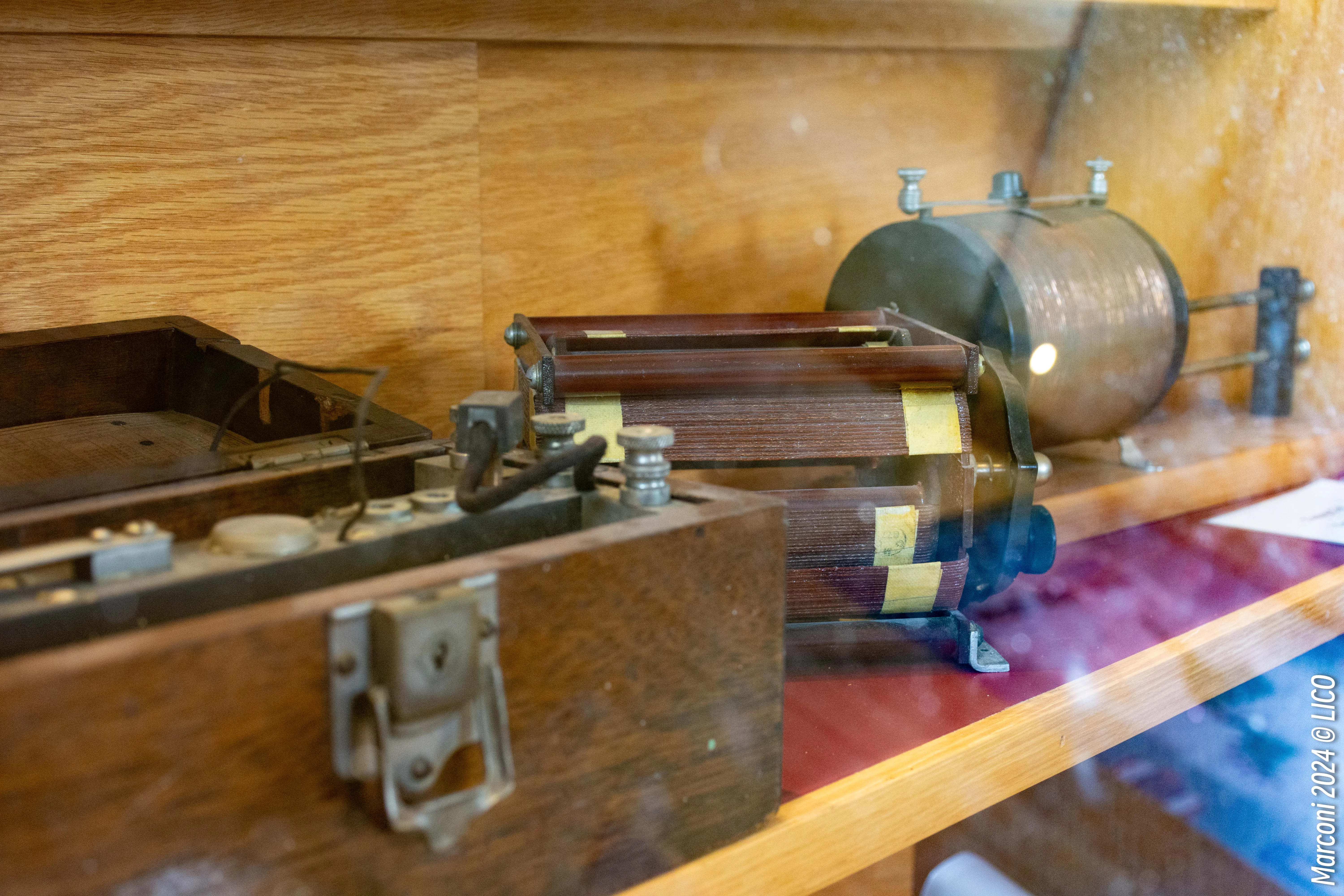
A simple transceiver and coils.
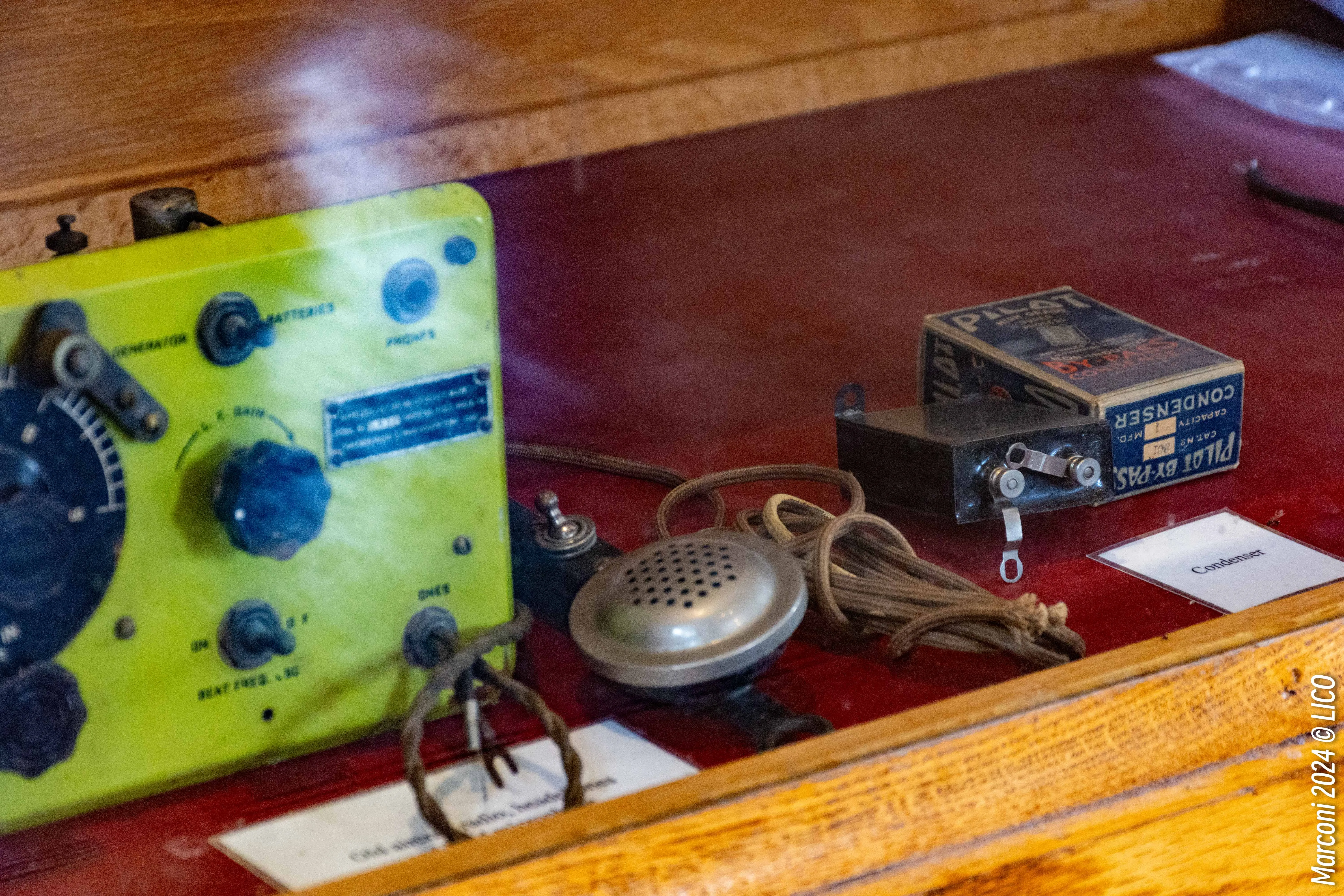
A transceiver, speaker, and condenser. “Condenser” is the older term for capacitor.
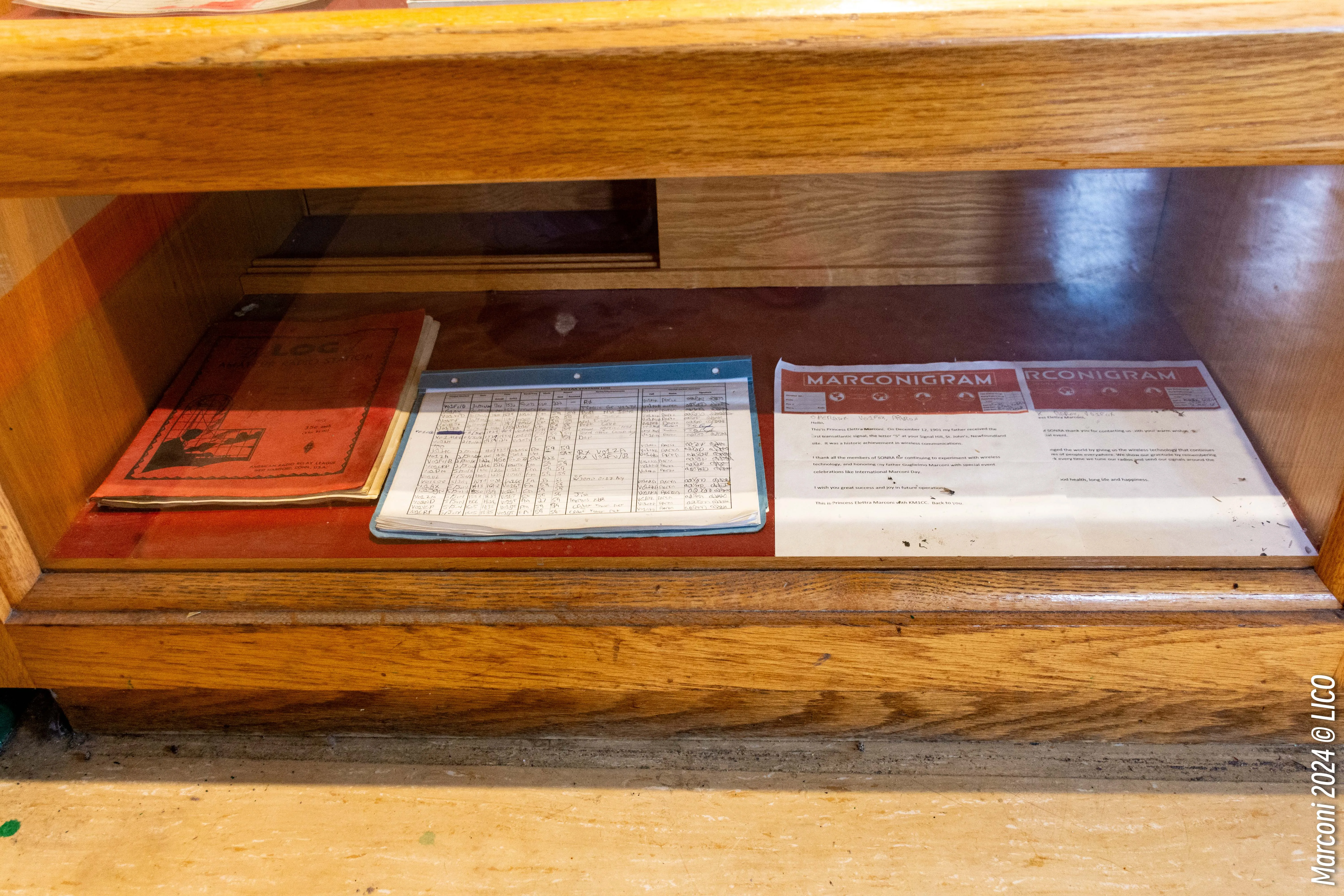
The station operating log.
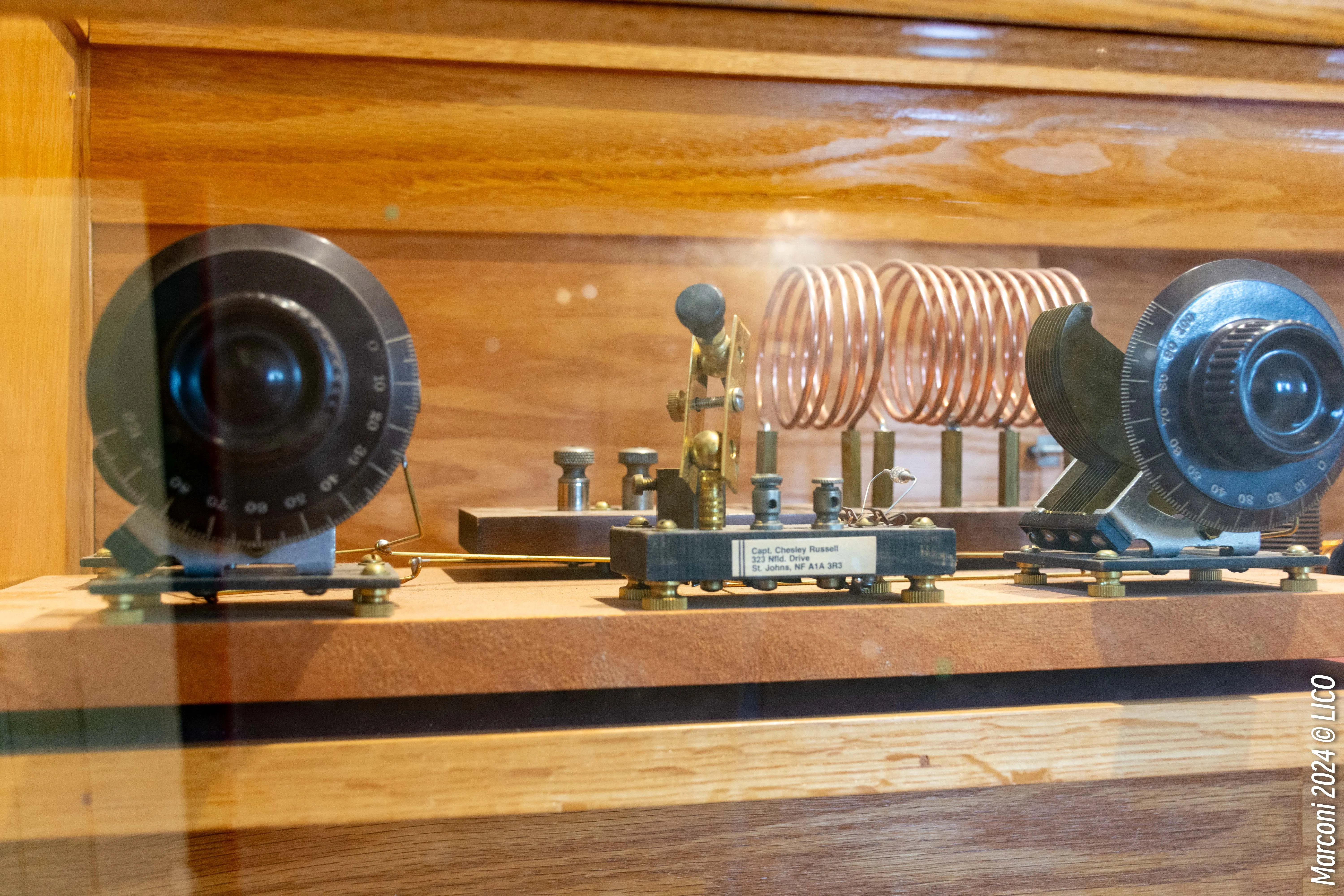
Possibly some kind of variable tuning circuit. Corrections are welcome.
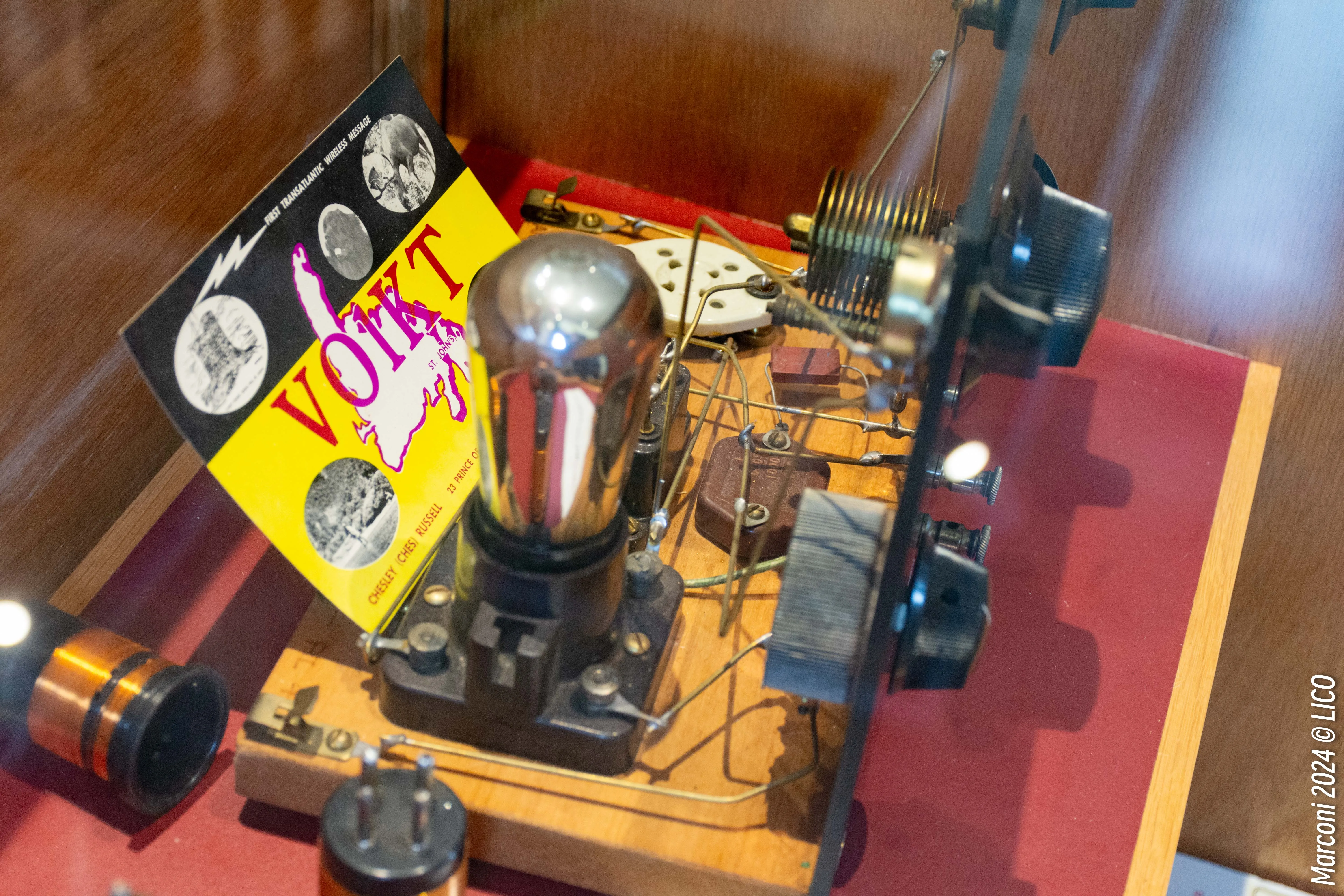
Possibly some kind of transceiver. Corrections are welcome.
After a morning of operating and conversation, the event was nearing its end. I went to the roof with several operators to help remove the antenna. VO1CH joked with me, “You are already one of us,” referring to SONRA. Honestly, I already felt very lucky to have been able to participate in an event like this. Besides, aren’t all HAMs around the world one family?
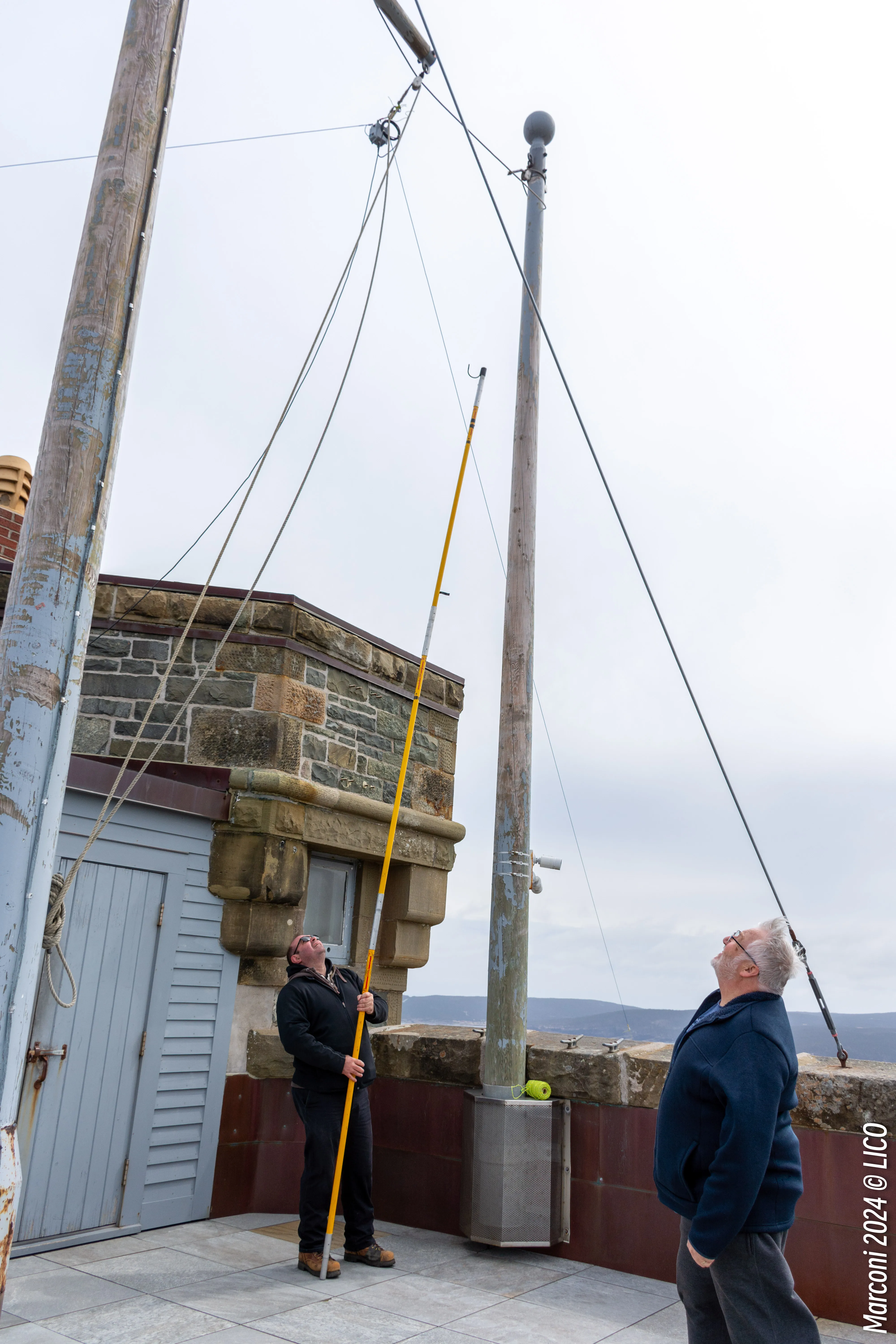
VO1CH and VO1BBN removing the antenna.
After we organized all the equipment, cleaned up the trash, and confirmed everything was safe, we prepared to lock the door and leave. The special event operation was over. After thanking all the HAMs and exchanging 73, I watched the antenna cars drive away one by one. Looking around, my view moved from the old historic site down toward the beautiful and modern harbor of St. John’s. It gave me a wonderful feeling of crossing time, where technology and culture meet. This truly was a beautiful pilgrimage.
Thank you for reading this far. I hope every HAM can make contacts in a friendly and proper way, and actively share amateur radio culture. 73!
2024.5.24